
Views: 0 Author: Site Editor Publish Time: 2026-09-08 Origin: Site


LED gobo projectors can place a bright warning symbol, pedestrian route, STOP message or restricted-area marker directly on a factory or warehouse floor. For Japanese buyers, the most useful manufacturers are not limited to companies headquartered in Japan: the shortlist below combines Japanese sources with international specialists whose products are relevant to industrial projects. Compare optical performance at the actual site, local electrical requirements, mounting constraints, replacement-gobo support and after-sales arrangements before ordering.
A gobo is a small metal or glass image carrier placed in the optical path of a projector. Light passes through the transparent parts and a lens focuses the resulting symbol on a floor or wall. Unlike a data projector, a fixed-image gobo unit has no video panel and can be optimized for one clear warning.
An LED gobo projector is different from a virtual line laser. A gobo unit projects an icon, word, arrow or patterned zone; a line projector concentrates light into a boundary or walkway edge. It is also different from an active detection system. A projector becomes responsive only when it is connected to a sensor, machine signal or traffic-control system.

Projected signs resist wear from tires, pallets and floor cleaning because the marking is light rather than paint or film. However, the image can be obscured by a parked load, bright sunlight, dirt on the lens or a poor-contrast surface. Projection therefore supplements risk controls, training, alarms, barriers and traffic management; it does not replace measures required by the site risk assessment.
Factory floor warnings often sit in the same areas that receive the heaviest forklift traffic, pallet movement and cleaning. Paint can fade, while adhesive graphics can lift, tear or become difficult to read. An overhead projector keeps the image source away from this physical wear and places the warning at the point where a pedestrian or driver needs to notice it.
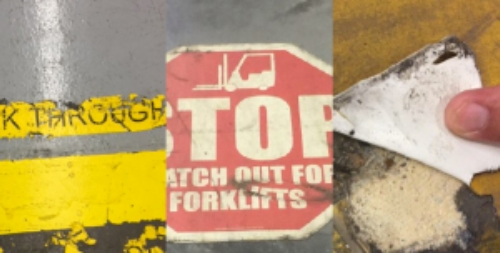
Projection is particularly useful at crossings, loading bays, temporary restricted areas, machine approaches and locations where the message may change. A fixed image can operate continuously, while a sensor-controlled system can display a warning only when a forklift, crane movement or process condition is detected. The appropriate method depends on the hazard assessment and the desired human response.
No contact wear: Tires, pallet jacks and routine floor cleaning do not scrape away a light-projected image.
Flexible messages: The warning can usually be changed by replacing the gobo rather than repainting the floor.
Useful placement: A symbol can be projected on a floor or wall where a conventional sign is frequently blocked or damaged.
Optional activation: Compatible systems can be connected to timers, relays, sensors or machine controls so the warning appears when relevant.
Lower disruption: Updating or relocating a projected sign may require less production downtime than removing and repainting a floor marking.
These benefits are conditional. Visibility falls when ambient light is too strong, the target surface has poor contrast, or goods and vehicles cover the projection area. The projector also consumes electricity and requires a secure mounting point, periodic lens cleaning and a defined response if the light fails.
TOPTREE develops industrial visual warning products, including industrial gobo projectors, forklift safety lights and virtual line systems. Its gobo range is intended for warehouses, workshops, loading areas and crane zones, with interchangeable single-color, two-color or full-color images and power configurations selected around the project.
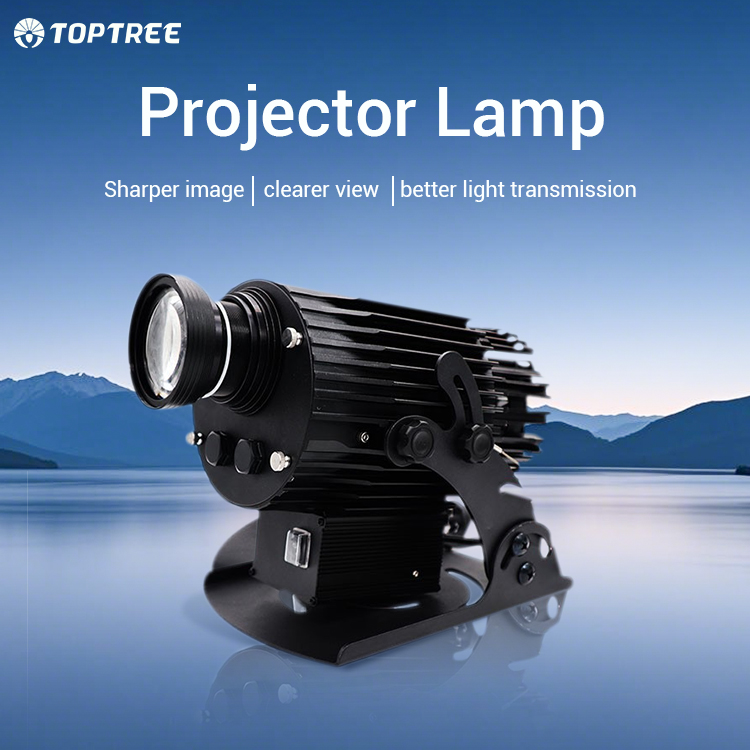
The company is a logical candidate when a Japanese buyer needs factory-direct customization, a low-volume trial or an integrated visual-warning package. Its LED floor sign projector can be configured for warnings such as forklift traffic, pedestrian crossings, restricted access and mandatory PPE. Ask for a projection calculation using the actual mounting distance, ambient illuminance and floor reflectance rather than selecting wattage alone.
Signflux is headquartered in Tokyo and has operational locations in Saitama. A Japanese industrial distributor lists a Signflux gobo projector specifically as a warning device for factories and warehouses, describing an IP65 enclosure, customizable designs and indoor/outdoor use.
This domestic route can simplify Japanese communication, site discussions and purchasing. Buyers should still request the exact model datasheet and clarify whether Signflux manufactures the full projector, integrates sourced hardware, or supplies the system under its own specification. That distinction affects spare parts, warranty routing and long-term model continuity.
EIKOHAG Factory offers a high-brightness LED gobo image projector with custom designs laser-processed on heat-resistant glass. Its Japanese product information mentions factory and facility warning applications in addition to retail and event projection, and the product is presented for 100 V use.
EIKOHAG may suit a buyer who values local design coordination and a simple custom projection. Because its published positioning spans commercial and industrial use, a factory project should confirm continuous-duty capability, dust and water protection, allowable temperature, mounting hardware and measured brightness at the planned distance.
Eagle Lighting presents a broad industrial virtual-sign portfolio: fixed gobo projectors in several output bands, outdoor models, LED line projectors and control options linked to sensors or external signals. This range is relevant where a sign should appear only when a forklift approaches or a process state changes.
For a Japanese installation, request a complete bill of materials covering projector, lens, gobo, controller, sensor, mounting bracket, safety cable and power connection. High stated LED power or luminous output does not by itself guarantee a readable floor image; the optical system, projection angle and local lighting determine the result.
Noparde positions itself as a manufacturer of heavy-duty industrial projection equipment. Its industrial safety offering includes floor warning gobo projectors, custom patterns and sealed housings intended for dusty, humid or demanding sites.
The range is worth examining for steelworks, logistics yards, processing plants and other difficult environments. Treat model-level temperature, IP and lifetime claims as items to verify in signed documentation. Japanese buyers should also ask who will handle import, installation, warranty returns and replacement optics.
Aladdin Gobo produces LED projection lights and custom gobos, including safety-sign projectors and multi-pattern models. Its OEM orientation may be useful for buyers that need a custom housing, power class, pattern set or branded package across multiple facilities.
The key purchasing task is to separate general advertising projectors from industrial-duty models. Request enclosure test reports, thermal limits, duty cycle, photometric data, vibration expectations and a sample gobo. If animated or multi-pattern projection is considered, check whether motion improves recognition or distracts vehicle operators at the intended location.
GoboSource supplies ECO Spot PCE virtual-sign projectors designed for rugged industrial environments. The range covers multiple LED power levels, interchangeable lenses and IP65 models; several models carry UL/cUL certifications for North American standards. Its catalog also distinguishes dedicated line projectors from image-projecting gobo units.
The documented lens choices make GoboSource useful for buyers who want to calculate image size and brightness rather than rely on a generic power recommendation. North American certification does not automatically establish conformity for a Japanese site, so the facility's engineer should review the selected power supply, cord, installation method and documentation.
Derksen Lichttechnik develops and manufactures PHOS LED projectors and custom glass gobos in Germany. The company shows virtual safety-sign applications, weather-resistant projector options and products designed for continuous operation. It also states an important practical limit: strong daylight can overwhelm projected images.
Derksen may fit a high-specification project that values optical engineering, replaceable light sources and detailed application advice. Buyers in Japan should confirm local representation, lead time, Japanese mains configuration and responsibility for installation calculations.
Goboservice manufactures projectors and gobos in Italy. Its Signum series is designed for safety-sign projection in industrial or permanent outdoor conditions. Published options include fanless IP65 construction, several lens angles, 110–240 V input and control or sensor accessories.
This combination can suit dusty facilities, areas that need narrow optics from a high mounting position, or signs activated by a process signal. Ask the company or an authorized dealer to select the lens from a site drawing and provide expected illuminance at the projection plane. Confirm the dealer and service route for Japan before specifying the brand.
Projected Image specializes in gobo projectors, custom gobos and projected signage systems. Its warehouse safety materials cover virtual floor markings, safety symbols and turnkey support, while its custom gobos are manufactured in-house.
The company is relevant when the buyer wants help coordinating artwork, projector selection and sign placement as one package. For a Japanese project, establish whether Projected Image will supply equipment only or support design and commissioning remotely, and identify a local electrical installer before purchase.

Measure illuminance at the target surface during the brightest operating condition. Note direct sunlight, skylights, polished floors and changing shadows. Ask each manufacturer to state the expected image size and illuminance for the proposed lens, throw distance and mounting angle. A small sample installation is the most reliable comparison.
Japan commonly uses 100 V mains, with regional frequencies of 50 Hz or 60 Hz. Confirm the exact input range, frequency, plug or hard-wiring method, protective device, grounding and cable specification with the facility electrician. Imported equipment may need a locally suitable cord, junction box or power supply even when the label shows a wide voltage range.
An IP rating addresses ingress protection, not every industrial risk. Review dust, washdown, humidity, oil mist, vibration, ambient temperature, corrosive agents and impact exposure separately. Hazardous or explosive atmospheres require equipment selected under the site's applicable engineering rules; a standard IP65 projector is not automatically suitable.
Projected artwork should remain legible when viewed at an angle and while a pedestrian or vehicle is moving. Prefer a familiar pictogram, few words, strong contrast and Japanese text where site users need it. Align the final symbol and color with the facility's safety system and applicable Japanese standards. A custom corporate graphic should not dilute a mandatory warning.
Even a long-life LED system needs inspection. Specify lens cleaning, mounting checks, image alignment, gobo replacement, cooling-path inspection and a test interval. Decide what temporary sign or barrier will be used if the projection fails.
RFQ item |
Information to provide |
|---|---|
Application |
Forklift crossing, pedestrian route, machine hazard, crane zone or wayfinding |
Site location |
City in Japan, indoor/outdoor status and delivery address |
Target surface |
Floor or wall material, color, texture, slope and reflectance |
Ambient light |
Measured lux at normal and brightest conditions, plus daylight exposure |
Geometry |
Mounting height, horizontal offset, throw distance, angle and available bracket points |
Image |
Pictogram, Japanese/English wording, colors and required projected dimensions |
Environment |
Temperature, dust, water, cleaning, vibration, oil mist and impact risk |
Electrical |
100/200 V supply, 50/60 Hz region, connection method and cable requirements |
Controls |
Continuous, timer, relay, PLC, motion sensor or vehicle-detection activation |
Documentation |
Datasheet, photometrics, drawings, manuals, test reports and warranty |
Commercial terms |
Quantity, sample unit, lead time, Incoterm, taxes, spares and service route |
TOPTREE can prepare a project recommendation from this information through its LED gobo projector solution. For a custom symbol, include vector artwork and request a proof showing how fine lines and colors will reproduce on the gobo.
Map the hazard and decide what the projection must communicate.
Measure ambient light and record target-surface photos from user sightlines.
Shortlist two or three suppliers and send the same RFQ data to each.
Compare projected illuminance, image size, lens, enclosure, controls and documentation—not wattage alone.
Trial one unit at the brightest time of day and observe pedestrians and vehicle operators from safe positions.
Have the facility safety and electrical teams approve the final location and symbol.
Record acceptance criteria, inspection intervals, spare parts and the fallback measure.
TOPTREE combines industrial gobo projectors with custom image production and other visual safety products. Buyers can specify power class, gobo color, projected image and mounting geometry, then validate the recommendation with site data. The product range supports low-quantity trials as well as repeat facility programs.
For a useful quotation, send site dimensions, photographs, ambient-light readings, voltage and frequency, mounting position, target image size, quantity and artwork. Use TOPTREE's contact page to request a lens and brightness proposal for the actual Japanese installation.
Projected signs can support workplace communication, but a projector does not automatically satisfy every legal or site requirement. The employer and responsible engineers should confirm the required sign, color, location, electrical installation and fallback controls under applicable Japanese rules and the facility risk assessment.
It may replace a worn floor graphic where the risk assessment permits, but it should not replace a physical barrier, guarded separation, alarm or operating procedure that the hazard requires. Treat projection as a visible communication layer within a wider control system.
Possibly, but visibility must be validated at the site. Ambient lux, sunlight, floor color, image size, lens, distance and mounting angle all affect contrast. Ask for photometric calculations and run a trial during the brightest operating period.
Do not choose from wattage alone. Two projectors with the same electrical power can deliver different useful image brightness because their LEDs, optics, gobo transmission and lens angles differ. Compare expected illuminance at the floor for the required image size.
Most fixed-image gobo projectors allow the gobo to be replaced. Confirm the gobo size, material, color process, replacement procedure and lead time. Keep approved artwork and at least one spare for critical locations.
A recognized pictogram is often faster to understand, while short Japanese text can clarify a site-specific instruction. The right design depends on the workforce and hazard. Avoid long sentences, thin strokes and unfamiliar symbols.
Begin with the hazard, not the projector catalog. Measure the site, define the message and send identical conditions to several qualified manufacturers. A credible supplier should be able to explain lens choice, projected size, expected brightness, enclosure limits, control method and service responsibilities. After a site trial and internal approval, document the projection as one element of the facility's complete safety system.


